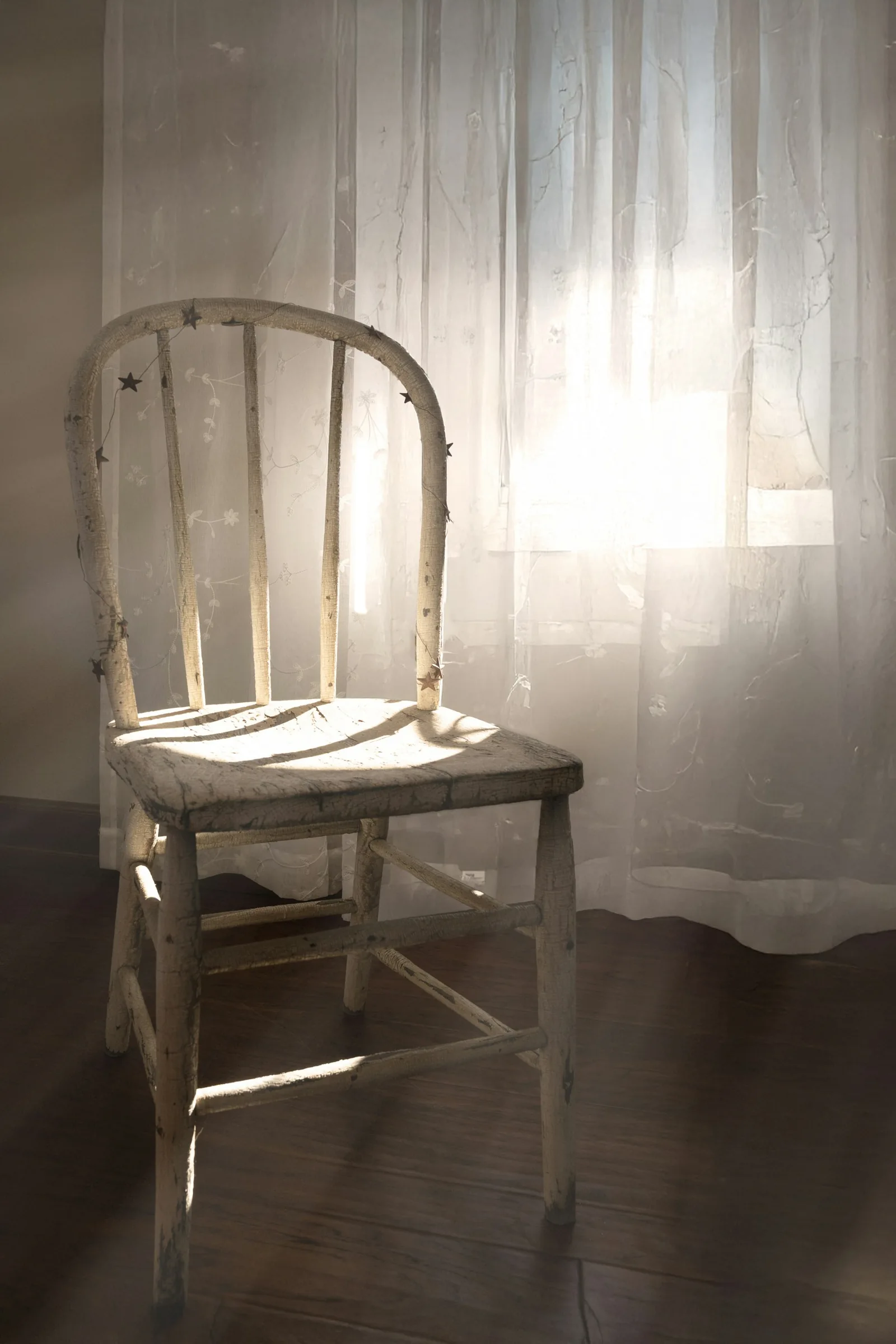
You probably know the chair in question. It has a small mark along the back, a slightly uneven finish, perhaps a cushion chosen for comfort rather than coordination. It has moved between rooms and been pulled up to several tables. At some point you started calling it the old chair, as though its age explained why it was still there. It may deserve a more generous description.
Living with an object gives you information that a product page cannot. You know whether this chair is comfortable after dinner has stretched into another hour. You know if its arms fit beneath the table, whether it is easy to move, and how much space it occupies when someone sits in it. Before replacing it, separate the parts that genuinely fail from the parts that simply look familiar.
A tired seat cover is a different problem from an uncomfortable seat. A surface scratch is a different problem from a loose structural joint. Look carefully, and ask a capable repairer about movement, cracks, or failing connections before continuing to use a questionable chair. Repair is most useful when it addresses the actual fault. A new layer of paint cannot make an unsafe joint dependable.
“Familiarity is useful information. You already know how this chair fits your life.”
For an otherwise sound chair, a small change may be enough. A removable cushion can make a hard seat more inviting. Replacing worn felt pads can quiet its journey across the floor. Cleaning should suit the existing finish, so start gently and test an inconspicuous area rather than treating every timber surface alike. The aim is to make the chair pleasant to use, not to erase its whole history.
There is also the matter of company. An old chair can look awkward in the middle of a matching set and perfectly settled beside a window. Try changing its setting before changing the chair itself. A plain table gives an expressive backrest room to be seen. A different lamp may bring out the warmth of the wood. Sometimes an object needs a better neighbour rather than a replacement.
Keeping something need not become a moral performance. If a chair does not fit your body, your room, or your life, passing it on can be the sensible decision. Nor does every damaged object justify an elaborate restoration. Consider the work, the cost, and the use you expect to get from it. An honest repair that allows another ten comfortable years is more meaningful than an ambitious project that stays in the hallway.
The strongest reason to keep the old chair is often uncomplicated: it is good at being your chair. Its proportions are familiar. It can hold a coat for an hour without anyone worrying. It belongs to the room through use, not merely through colour. When the urge to replace it returns, sit down first. Give the existing arrangement a few quiet minutes to make its case.