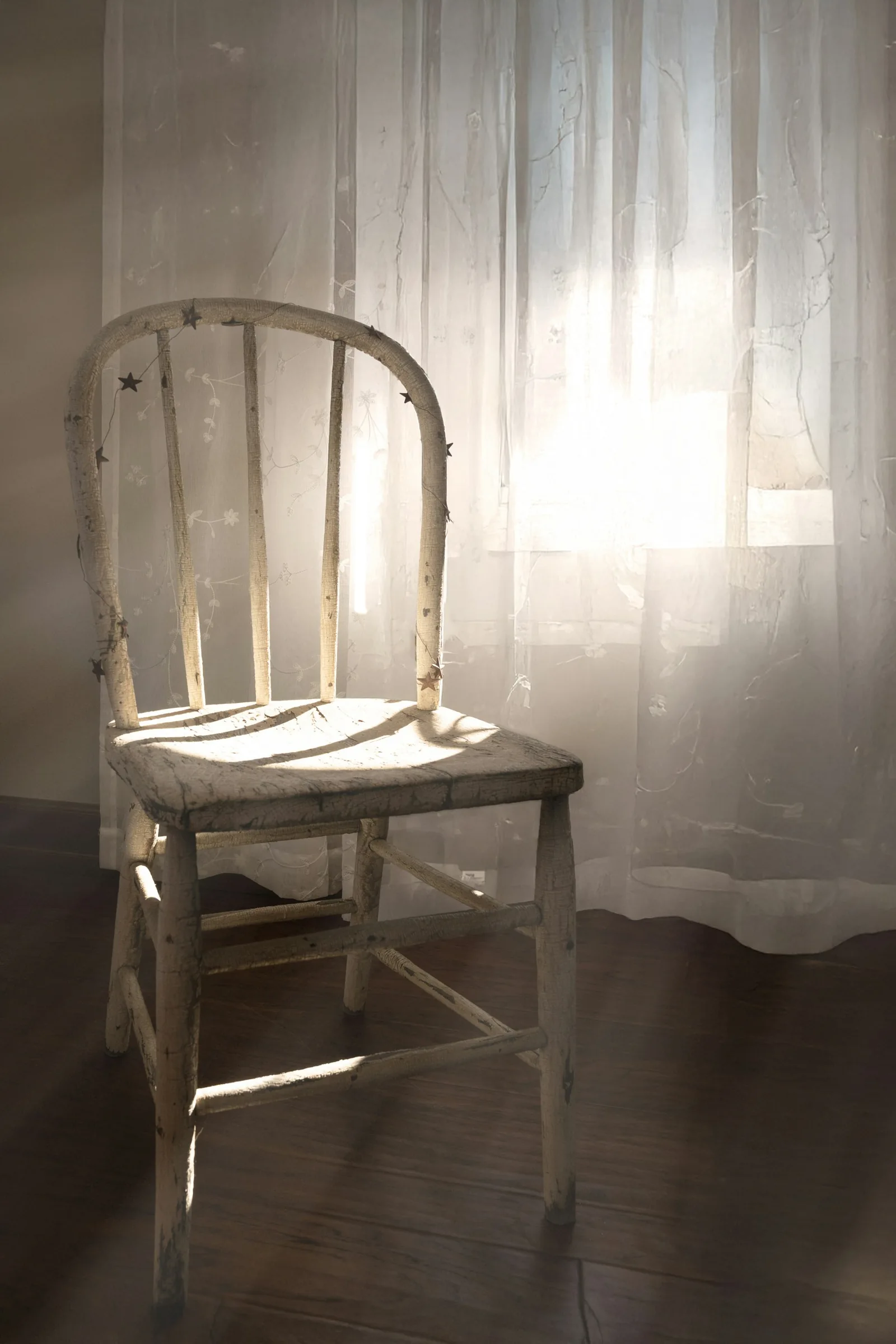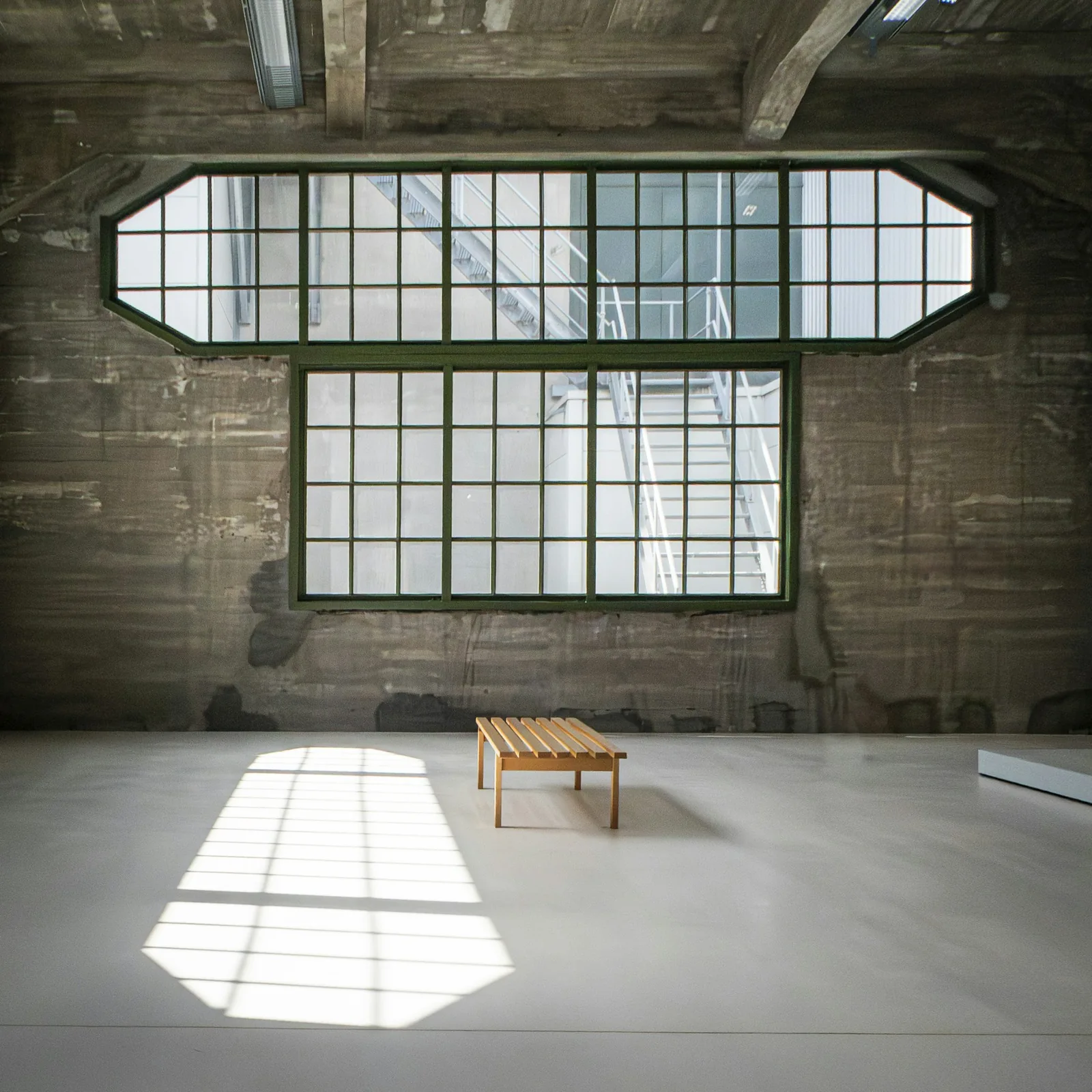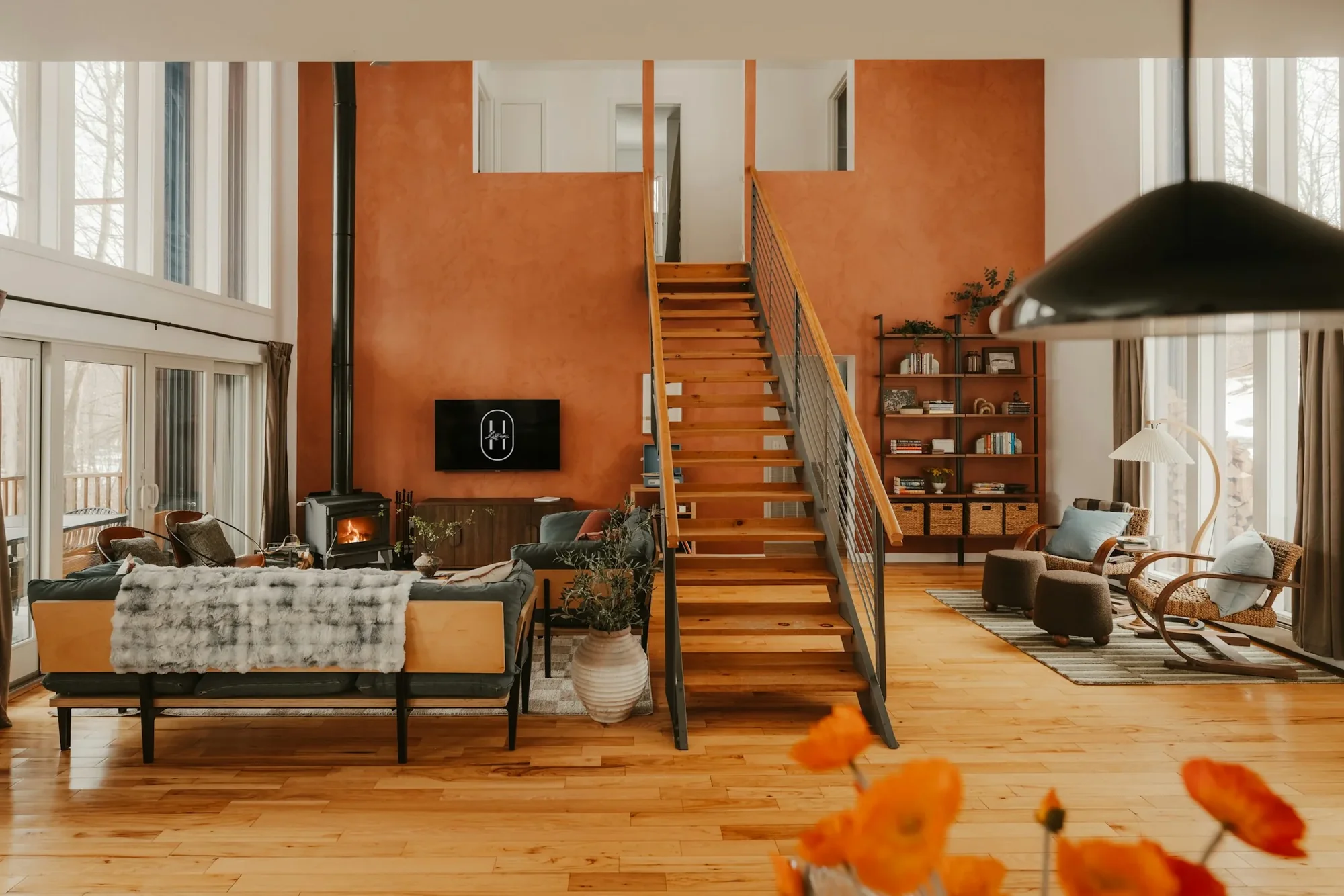
There is a particular kind of room that looks complete before anyone enters it. The cushions are arranged, a book is open at the right page, and every surface has something to say. It can be beautiful. It can also leave you wondering where to put your bag. A room that works has a little unfinished business: a clear corner, a spare hook, a table with room for the thing you brought home.
Begin with the route through it. Open the door all the way and walk to the window. Take the journey you actually make, carrying a laundry basket or a tray. If you turn sideways around a chair every morning, the chair is in the wrong place, however neatly it sits in the photograph. Moving one piece ten centimetres can change the feeling of a room more than buying another.
The next thing to notice is where you stop. A place to sit should have somewhere to set a cup without reaching across a passage. A reading light belongs near the page. A small surface by the entrance can collect the objects that otherwise travel into every room. These are modest arrangements, but they let the rest of the space feel quieter because its daily negotiations have already been considered.
“A clear corner is useful. It leaves room for whatever the day brings.”
An empty wall is not necessarily a question waiting for an answer. It may be the part that allows a cabinet, a view, or an interesting patch of afternoon light to register. Try living with a wall for a week before filling it. Watch what moves across it. Notice whether the room needs a picture, or whether you have simply become used to expecting something in every available place.
Storage deserves the same patience. A cabinet with a little room left inside is more useful than one organised to its absolute limit. The spare capacity has a job: it absorbs a new book, a borrowed bowl, the temporary collection of things awaiting repair. When every object has only one possible position, putting things away becomes a small test. A forgiving cupboard makes the habit easier.
None of this requires a room to be pale or sparse. A crowded bookcase can feel generous; a nearly empty apartment can feel awkward. The difference often lies in whether you can move freely and use what is there. Keep the patterned curtain if you love it. Keep the large table if people gather around it. Give the things that matter enough clearance to be enjoyed.
Before adding anything, try a small subtraction. Move a side table out for an evening. Clear one shelf. Put the extra chair in another room and see whether you miss it. The point is not to arrive at the fewest possible possessions. It is to make room for the next ordinary thing: a visitor, a half-finished project, an afternoon spent doing very little.